
If You Want $1 Million, Be Creative
An interesting piece about how creativity can help distinguish your cause and create a strong memorable impression!

A wise person once said, “It’s not just what you say, but how you say it.”
Another wise person once stated, “A picture is worth a thousand words.”
Creatively taking these two aphorisms together can lead to great fundraising success. Consider what happened when the City of Philadelphia competed for a $1 million grant in the Bloomberg Philanthropies’ Mayors Challenge:
 Good Company Ventures, the Wharton School at the University of Pennsylvania, and the Philadelphia Department of Commerce collaborated on a grant application for their Philadelphia Social Enterprise Partnership.
With over 300 cities from 45 states competing, the Philadelphia collaborative knew it needed to do something to standout. The Philadelphia team prepared the required written proposal, which came in at 30 pages of dense content.
Then, they contracted with David Gloss and his team at Here’s My Chance, a Philadelphia-based creative agency that works with nonprofit organizations. HMC was tasked with…
View original post 793 more words
Reflections on the Baltimore AFP Conference


Lisa and I met some terrific people at the Association of Fundraising Professionals conference! Clients and friends, and new acquaintances who walked into our booth and just got excited about the art and what it can do for the fundraising process. Very energizing!
Here are a few tidbits paraphrased from the trio of amazing speakers: Whoopi Goldberg, Seth Godin and Isabel Allende! (more…)
Simple Techniques to help our Visual Thinking
Wow – great article about the importance of visualization to thinking and understanding. Fascinating!

This post looks at two techniques to assist our visual thinking: the humble Venn Diagram and the Concept Tree.
Visualization is the fundamental element of reasoning. This is an argument that Aristotle proposed and many more have affirmed, including Grim, who I make reference to in this post.
Before getting to the actual techniques, we need to step back and clarify some basic building blocks.
We use words, sentences, concepts etc. The point is: how do these things relate to each other; what do they mean; and what does it have to do with visualization?
Words are just signs. The physical word is nothing more than a combination of sounds or marks when written. The word becomes of interest when it has an association with ideas. Concepts lie behind the words. The words themselves are meaningless. It is the ideas associated with those words that are of interest.
To illustrate…
View original post 737 more words
Your mom is overweight, and your dad is starting to forget things
Your mom is overweight, and your dad is starting to forget things.
Great article for anyone interested in the connections between art and healthcare!
Your mom is overweight, and your dad is starting to forget things
Great post by photographer, Peter Blanchard that talks about evidence-based art research – research that demonstrates how certain kinds of art can have a true positive impact on health and quality of life.

No, this isn’t a “your mom” joke, and my blog has not been hacked and taken over by teenage pranksters. I chose the title because these things are inevitable. Aging, illness, injury . . . they happen to everyone.
I made a statement in my recent video that everyone will end up in the hospital sooner or later, either for yourself or attending a loved one. Yes, even you.
Why am I talking about this on a photography blog? I’m talking about it because several years ago I learned that I, a simple nature photographer, had at my fingertips the tools to make a difference. I learned that much of the art I was already creating was in alignment with the principles of Evidence-Based Art research – research demonstrating that art with specific elements can have a very real and tangible positive impact on the quality of life.
Can this…
View original post 219 more words
Capital Caring Mural Installation

Here it is all squared out and ready to go up
Let’s put it up on the wall!
Thank you to the amazing tile setters, Rob & Kevin of Schlichter Tile & Marble
Placing the names…
Now for the center imagery tiles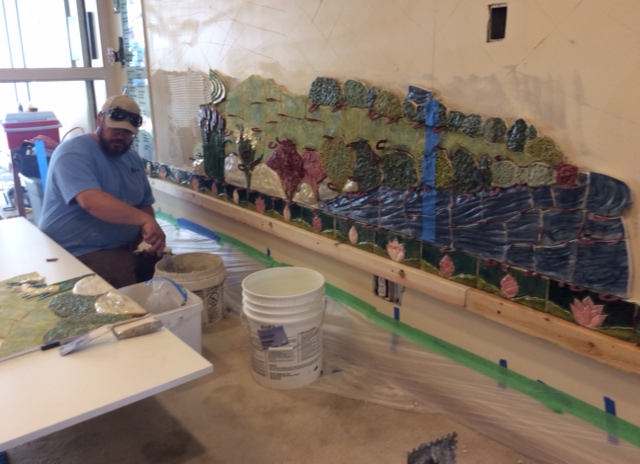
Piece by piece…
Detail of texture and flow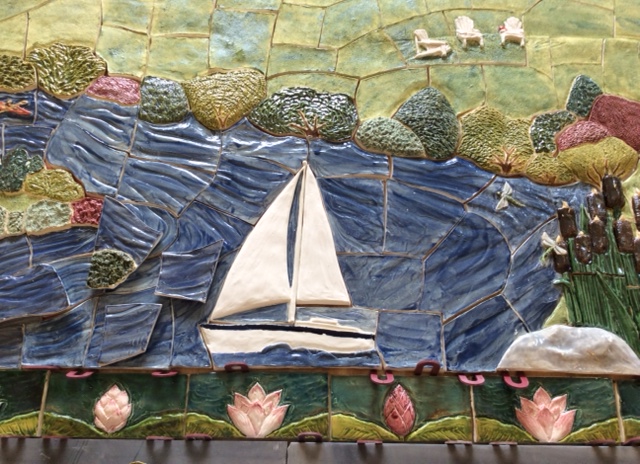

Thanks for visiting our on-site installation day. Stay tuned for the final reveal and be sure to share our blog with your friends!
Final Cutting Stage for The Capital Caring Mural
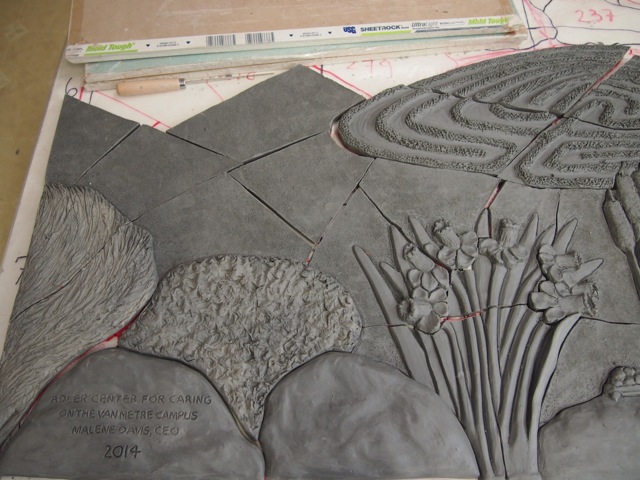
Note the cornerstone we created.

The easel is losing its pieces slowly but surely.

Gigi is spraying the cut pieces with water to keep them moist during the trimming and labeling process.
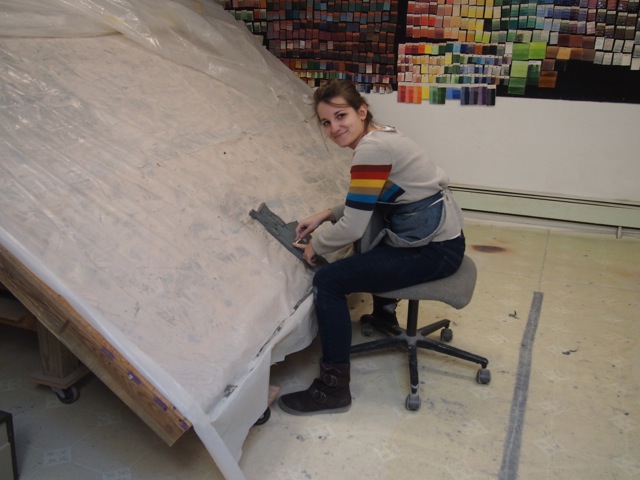
The last few pieces come off the easel.
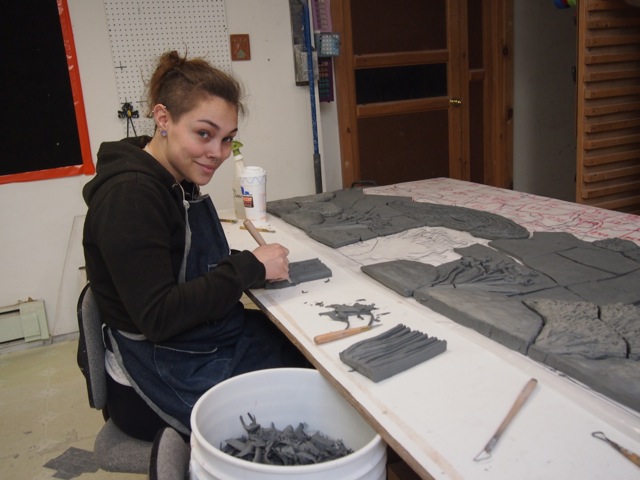
Rachel looking up from trimming the edges.

Tiles drying on drywall boards.
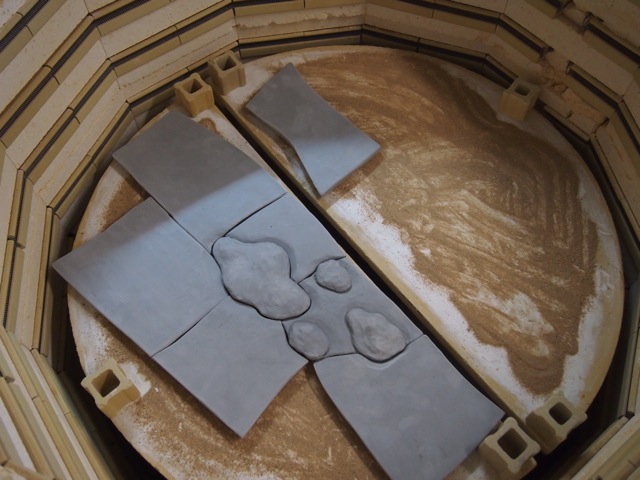
Cutting Up The Mural
This step in the mural process is interesting. Come on in and see how it’s done.
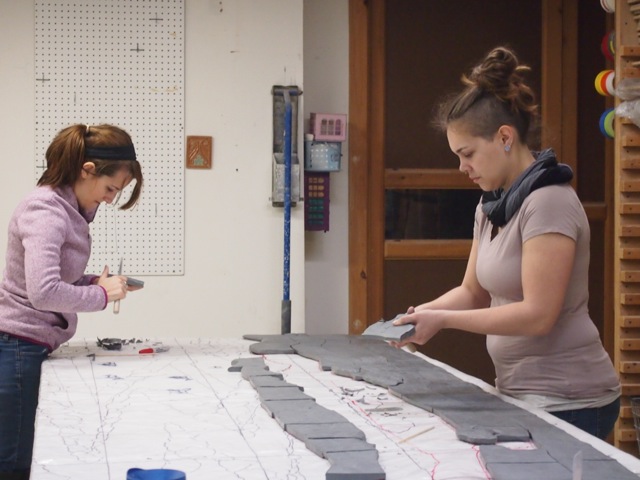
Gigi and Rachel trimming tiles and mapping the mural.
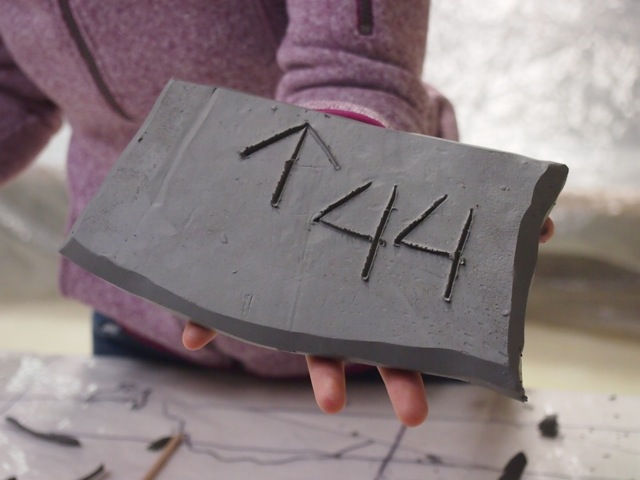
Each piece gets a number and an arrow going up.
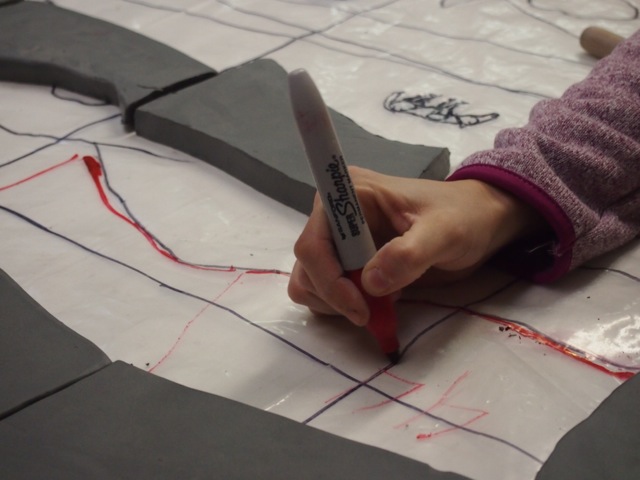
And then the same number is marked on the plastic pattern.
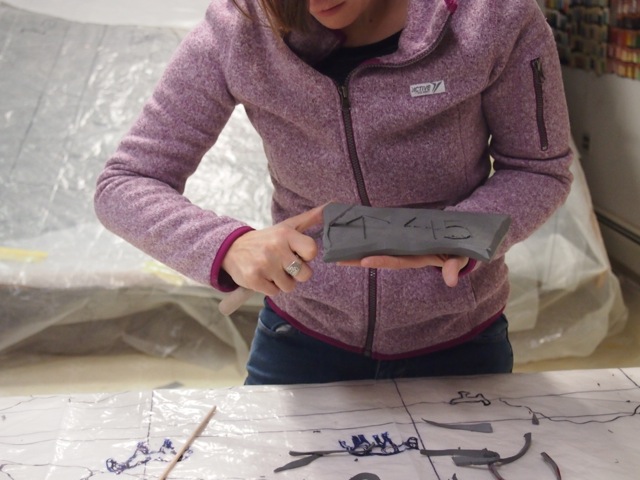
Trimming the edges of each piece.
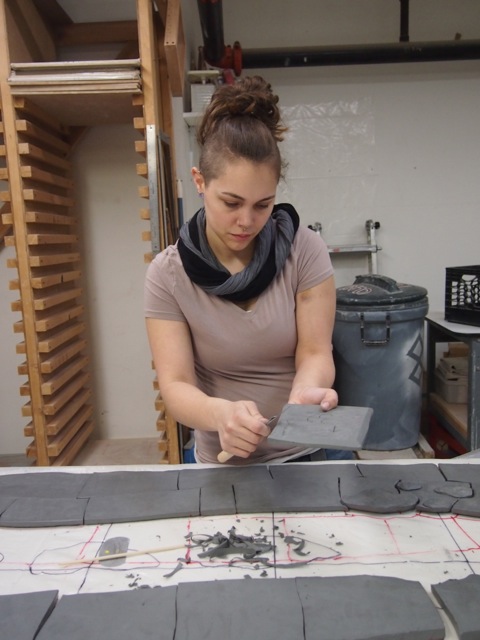
Trimming another piece. The extra clay all gets recycled.
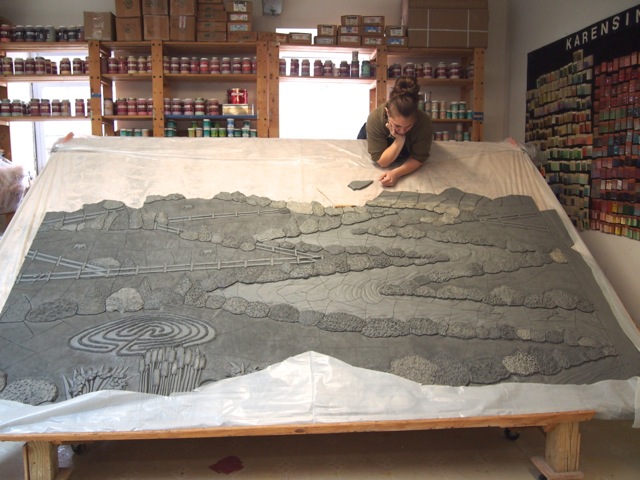
Rachel contemplating which piece to cut next.
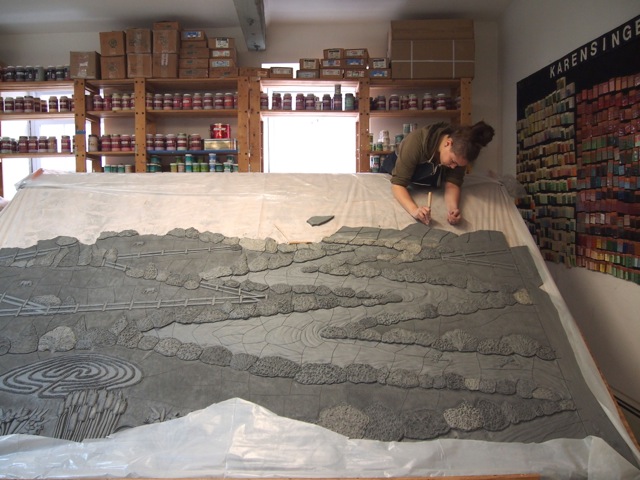
Starting the cut. Note how she is holding the tool straight up and down to avoid angles.
As you can see, every detail is critical to the overall success of our mural installations. A successful piece of work takes a balance of creativity and technical experience. We take our approach very seriously while having fun doing it. Thanks for stopping in today to our studio. See you next time!
Studio Update-Capital Caring
We’re proud of these most recent shots from the Capital Caring mural.

The first half is complete and we are ready to cut it up.

A detail showing the cut lines. This is always so hard, but necessary.
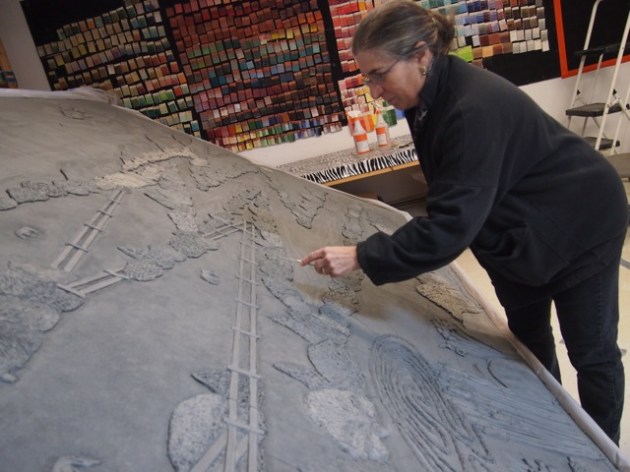
Karen making decisions about where to place the cuts.

One of the hidden elements.

Another small detail – Peter Cottontail.
Thanks for visiting our studio. Share this blog with someone who loves art!
Capital Caring Mural Update
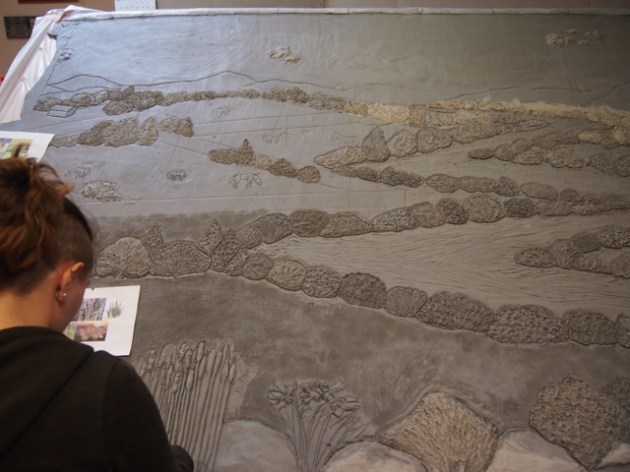
Rachel referring to reference images as she sculpts the cat tails.
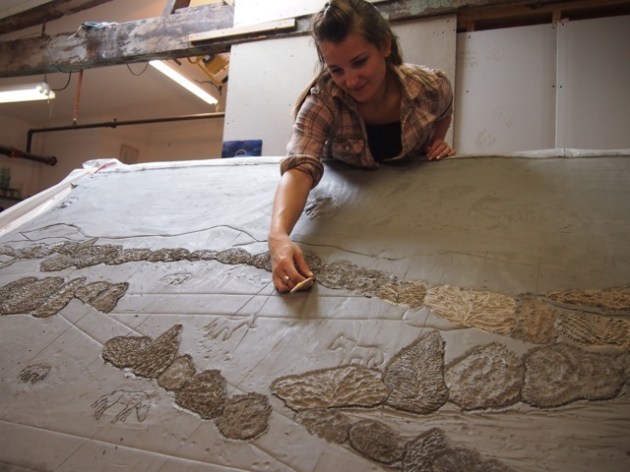
Gigi fine tuning some bushes in the background.
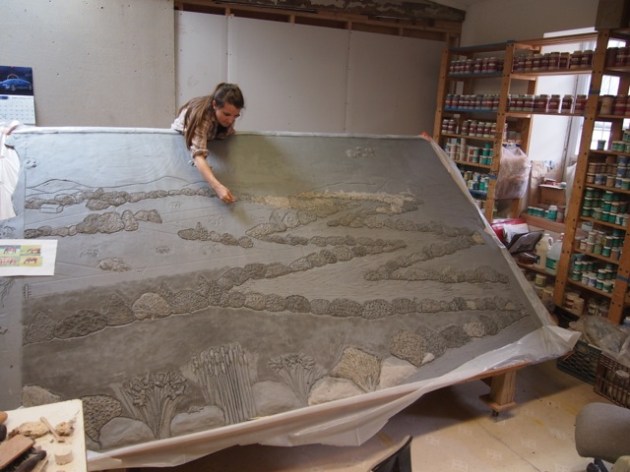
Gigi fine tuning and a glimpse of the whole mural in process.
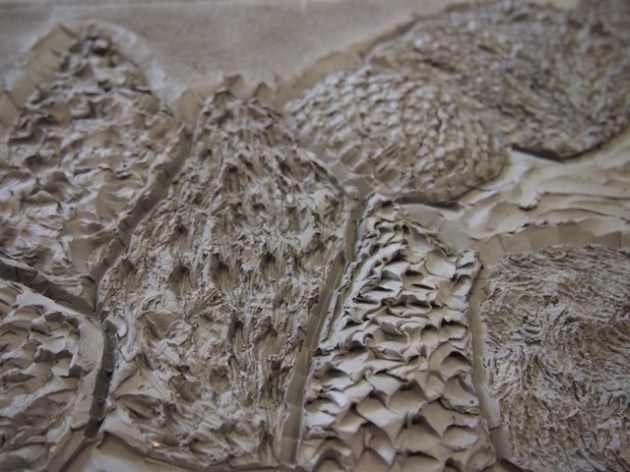
A close up view of some bushes. Can you guess what tools we used to get these textures?
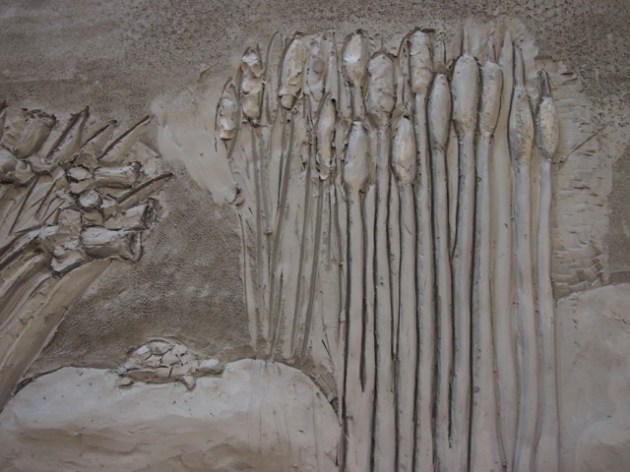
Cat tails being built out.
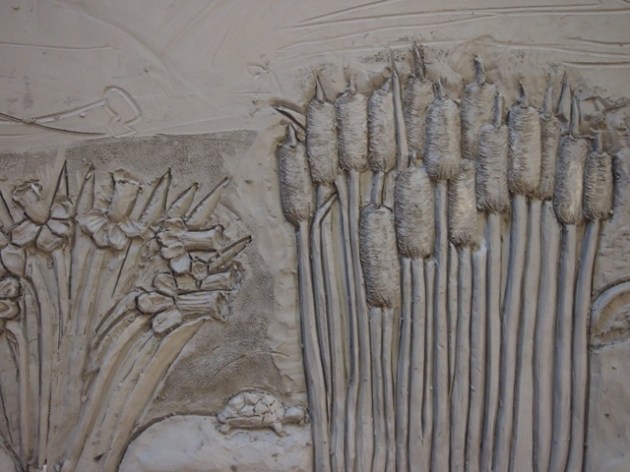
Cat tails refined and with texture added.

The Labyrinth is almost finished. There will be an actual labyrinth on site at the Adler Centre.
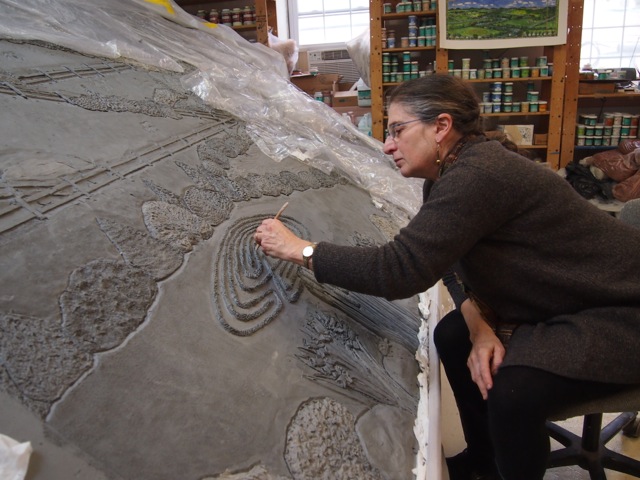
Karen adding texture to the labyrinth.
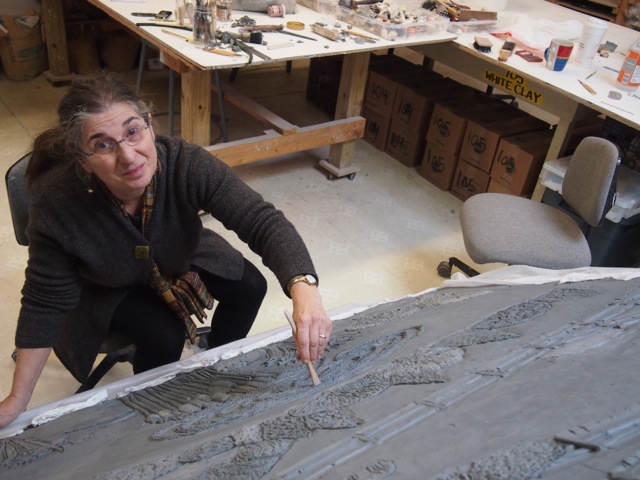
Karen looking up.
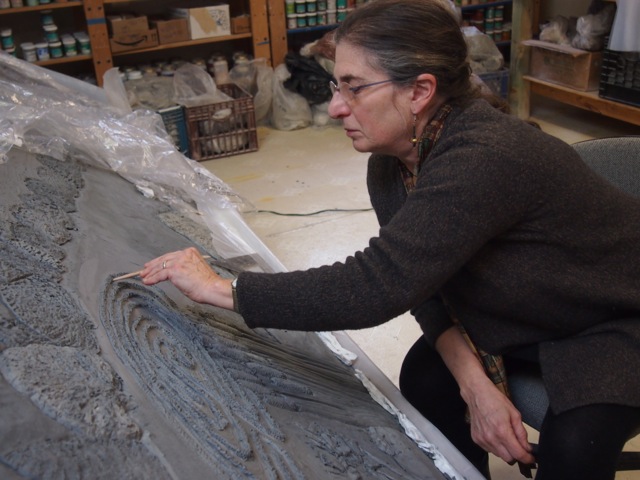
Karen fine tuning an edge of the labyrinth.
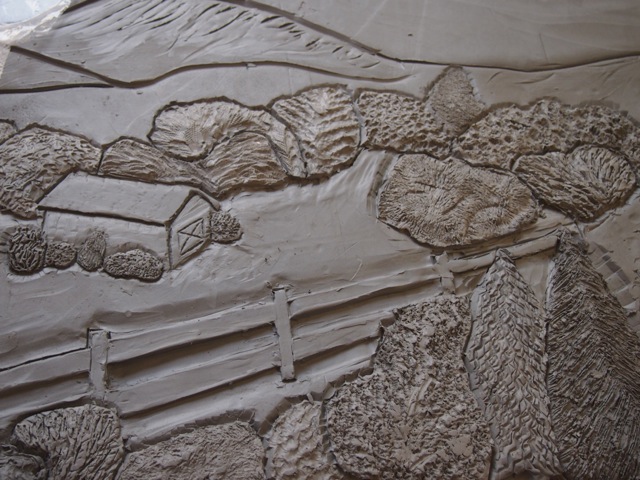
Close up of the “barn” area in top left corner.
Recent Comments
Ray on The Hidden Power of the Ruby… Laura Punnett on A Sense of Place Monty Bridges on Capital Caring Mural Inst… Leslie@MasteryCoachi… on Small Changes in Perspect… Mordechai Liebling on Our Largest Donor Mural Yet…


 Karen~Singer~Talks~Tile